Rapeh and the Chakra System

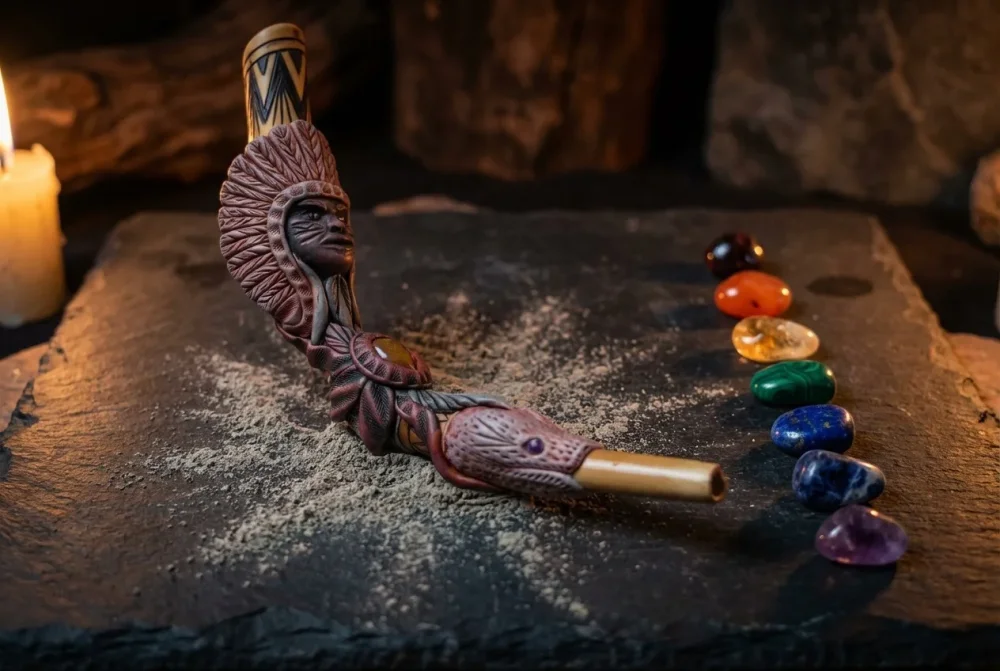
Rapeh (pronounced "ha-peh"), also known as Hapé, is a sacred shamanic snuff that has been used by indigenous Amazonian tribes for thousands of years. This finely ground powder, made from sacred tobacco (Nicotiana rustica) and medicinal tree ashes, plays a central role in traditional healing ceremonies. One of the most fascinating aspects is how indigenous practitioners understand Rapeh to interact with the body's energy centers—the chakras.
The Seven Chakras: Essential Overview
The chakra system originated in ancient India over 1,000 years ago. "Chakra" means "wheel" in Sanskrit, referring to spinning energy centers along the spine. While indigenous Amazonian traditions didn't originally use this terminology, they developed their own sophisticated understanding of energy flows that parallels the chakra framework.
Here are the seven main chakras:
1. Root Chakra (Muladhara) - Base of spine - Red
- Governs: Survival, security, grounding, physical vitality
- Imbalance: Fear, anxiety, feeling ungrounded
- Balance: Stability, safety, presence
2. Sacral Chakra (Svadhisthana) - Lower abdomen - Orange
- Governs: Creativity, sexuality, emotions, pleasure
- Imbalance: Emotional instability, creative blocks, guilt
- Balance: Emotional fluidity, creative expression, joy
3. Solar Plexus Chakra (Manipura) - Upper abdomen - Yellow
- Governs: Personal power, confidence, willpower
- Imbalance: Low self-esteem, lack of control, shame
- Balance: Confidence, self-worth, healthy boundaries
4. Heart Chakra (Anahata) - Center of chest - Green
- Governs: Love, compassion, connection, forgiveness
- Imbalance: Difficulty with relationships, loneliness, bitterness
- Balance: Compassion, emotional openness, unconditional love
5. Throat Chakra (Vishuddha) - Throat - Blue
- Governs: Communication, truth, self-expression
- Imbalance: Difficulty speaking truth, fear of judgment
- Balance: Clear communication, authentic expression
6. Third Eye Chakra (Ajna) - Between eyebrows - Indigo
- Governs: Intuition, insight, imagination, spiritual awareness
- Imbalance: Lack of clarity, poor intuition, confusion
- Balance: Clear vision, intuition, imagination
7. Crown Chakra (Sahasrara) - Top of head - Violet/White
- Governs: Spiritual connection, enlightenment, consciousness
- Imbalance: Spiritual disconnection, cynicism, depression
- Balance: Unity consciousness, spiritual awareness, bliss
How Rapeh Connects with the Chakras
Overall Energetic Effects
Traditional practitioners describe Rapeh as working holistically on the entire energetic system. The forceful application through the nasal passages—which have direct neural pathways to the brain—is understood to create an immediate "reset" that affects all energy centers simultaneously.
General effects reported by practitioners include:
Full Chakra Alignment: Rapeh is said to help re-align the entire chakra system, allowing blocked energy to flow more freely through all centers.
Immediate Grounding: Strong downward pull of energy into the Root Chakra and earth connection, helping scattered or "ungrounded" individuals feel more present and stable.
Mental Clarity: Clearing of the Third Eye and Crown Chakras, creating space for clearer perception, intuition, and spiritual connection.
Energetic Purging: Physical release (mucus, tears, sometimes nausea) is understood as the body releasing stuck energetic patterns from various chakras.
Specific Chakra Connections
Root Chakra - Grounding and Stability
Rapeh's most pronounced effect is its grounding quality. Traditional practitioners emphasize how the medicine pulls scattered energy down into the body and connects practitioners to earth energy. Blends containing ashes from grounding trees like Paricá are specifically associated with deep Root Chakra work, helping with feelings of safety, stability, and physical presence.
Solar Plexus - Personal Power
The immediate intensity of receiving Rapeh—the sharp sensation, the challenge of remaining present—is viewed as strengthening the Solar Plexus Chakra. Learning to receive the medicine with calm presence builds personal power and confidence. Traditional practitioners describe Rapeh as clearing shame and self-doubt from this center.
Heart Chakra - Emotional Opening
Many practitioners report emotional release and heart opening with Rapeh. The medicine facilitates the release of grief, bitterness, and protective armor stored in the Heart Chakra. Blends containing wild cacao (Theobroma cacao) are particularly associated with gentle heart-centered work.
Throat Chakra - Clear Expression
The pathway through nasal passages and throat is understood to directly clear the Throat Chakra. Practitioners describe improved ability to speak truth and express authentically after working with Rapeh. The purging that sometimes occurs—excess mucus or emotional release—is viewed as clearing blockages to authentic communication.
Third Eye - Intuition and Vision
The Third Eye receives particular emphasis in Rapeh traditions. Application through the nose impacts the pineal gland, traditionally associated with this chakra. Practitioners describe Rapeh as:
- Opening inner vision and intuitive perception
- Clearing mental fog and enhancing meditation
- Facilitating visionary experiences in ceremony
- Supporting spiritual insight
Visionary blends containing Banisteriopsis caapi (ayahuasca vine) are especially associated with Third Eye activation.
Crown Chakra - Spiritual Connection
The immediate shift in consciousness after Rapeh application—sudden clarity, heightened presence, connection to something greater—is understood as opening the Crown Chakra. Traditional practitioners use Rapeh to facilitate connection with higher consciousness, spirit guides, and plant intelligences. Its use before Ayahuasca ceremonies is partly to open the Crown and prepare for deep spiritual work.
Key Ingredients and Their Associations
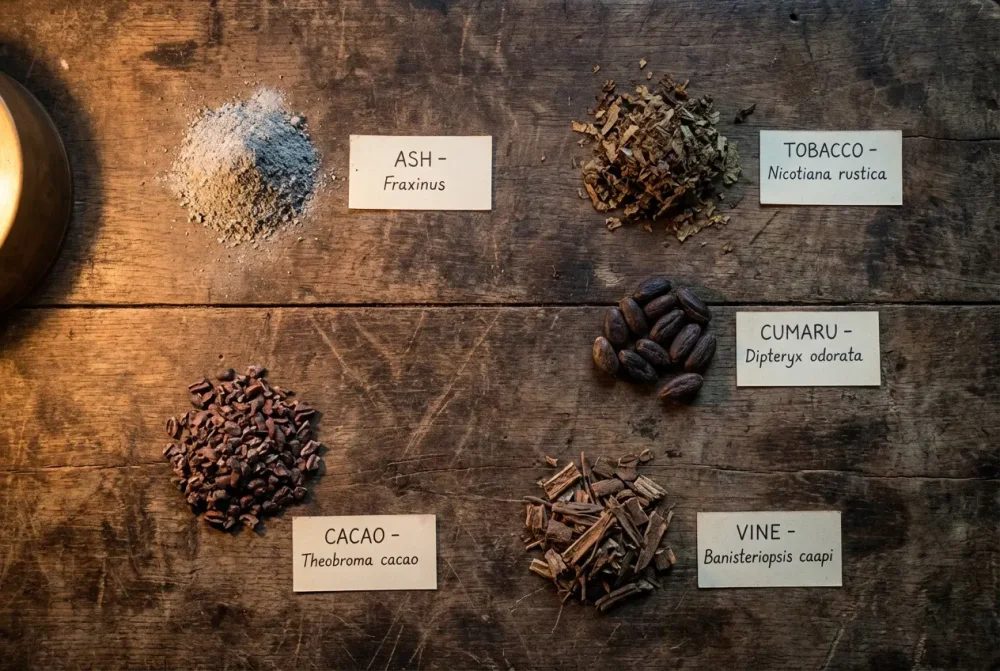
Paricá (Schizolobium amazonicum): Strong grounding, Root Chakra, earth connection
Tsunu (Platycyamus regnellii): Clarity and focus, Third Eye activation
Mulateiro (Calycophyllum spruceanum): Healing, full-body balance
Wild Cacao (Theobroma cacao): Heart opening, compassion, gentle uplift
Banisteriopsis caapi: Visionary properties, Crown and Third Eye
Cumaru (Dipteryx odorata): Protective, grounding, masculine energy
Awiry (fresh tobacco): Gentle, subtle opening, good for beginners
Visual Indicators
Darker Rapeh: Higher ash content from grounding trees, Root Chakra focus
Green Rapeh: Contains fresh ingredients, Heart Chakra and integration work
Fine/Light Rapeh: Gentler effects, suitable for upper chakras
Coarse/Strong Rapeh: Intense grounding, powerful clearing action

Conclusion
The connection between Rapeh and the chakra system demonstrates how different spiritual traditions recognize similar truths about human energy and consciousness. While Amazonian shamanic wisdom and Vedic philosophy developed independently, both understand that we are more than physical bodies—that energy flows through us in patterns that can be influenced through specific practices and plant medicines.
Traditional practitioners describe Rapeh as working holistically from Root to Crown, grounding us while simultaneously opening us to higher consciousness. Whether you view chakras as literal energy centers or as useful frameworks for understanding human experience, the traditional wisdom around Rapeh offers profound insights into plant medicine's role in healing and spiritual development.
For those called to work with this medicine, approaching it with respect, proper preparation, and cultural sensitivity is essential. Rapeh connects us to ancient wisdom, plant intelligence, and the depths of our own consciousness—a bridge between earth and spirit, body and soul.
Related Products & Further Reading
Explore Our Collection:
- Rapeh Collection - Traditional tribal blends for ceremonial use
- Kuripe - Authentic application pipe
- Tepi - Authentic application pipe
- Sananga - Amazonian eye drops used in ceremony
- Mapacho - Sacred tobacco for rituals
- Ceremonial Cacao Chuncho from Peru
Educational Resources:
- The Nukini People and Their Traditions
- Banisteriopsis Caapi: Sacred Vine
- Sustainable Ethnobotanical Practices
To learn more about the history and origins of this medicine, read our ultimate guide: What is Rapé?"
IMPORTANT DISCLAIMER:
This article is for educational and ethnobotanical research purposes only. Rapeh products are offered as ethnobotanical incense samples and are not for internal use. The information describes traditional practices, not recommendations.