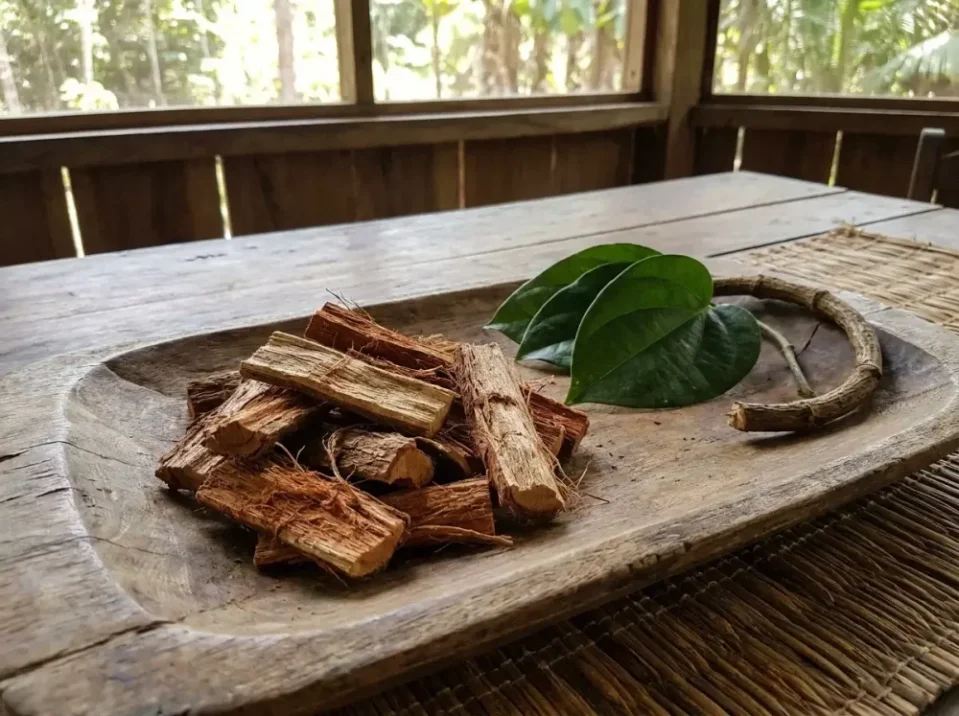
Vilcacora (Cat's Claw / Uncaria tomentosa): the Amazonian vine, its tradition, compounds and research
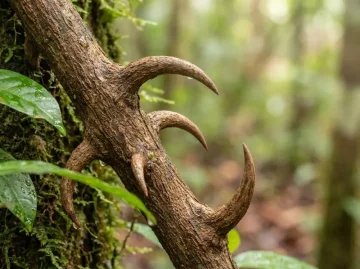
Vilcacora, better known across the UK as Cat's Claw, is the woody Amazonian vine Uncaria tomentosa. The two names point to the same plant: Vilcacora is its Peruvian name, Cat's Claw the English one, both earned by the curved, hook-like thorns along its stems. The vine uses those thorns to grip neighbouring trees and climb through the dense rainforest canopy towards the light.
To the indigenous peoples of the Peruvian Amazon, the vine is more than its appearance. Its bark holds a long place in local ethnobotany, most often associated with the Asháninka people. Modern analysis later revealed an unusually rich profile of alkaloids, triterpenes and polyphenols, which is why the plant still draws pharmacological interest today.
This guide covers what Cat's Claw actually is: where it comes from, what the bark contains, how it has traditionally been used, what the research does and doesn't show, and what to look for when buying. No overstatement, and no promises the plant can't keep.
What is Vilcacora, or Cat's Claw
Uncaria tomentosa (Willd. ex Schult.) DC. belongs to the Rubiaceae family, the same family as the coffee plant. It's a vine of the humid tropical forest, native to Central and South America including much of the Amazon basin, growing at roughly 200 to 800 metres above sea level.
The plant develops a woody stem and grips surrounding vegetation with its curved thorns. Those thorns gave rise to the Spanish name Uña de Gato and the English Cat's Claw.
In the UK you'll come across several names for the same plant: Cat's Claw, Vilcacora, Uña de Gato and, on the label, Uncaria tomentosa. It's worth watching the botanical name when buying, because the folk name is shared with a related species (more on the tomentosa versus guianensis distinction below).
You can buy Vilcacora on our eshop here.
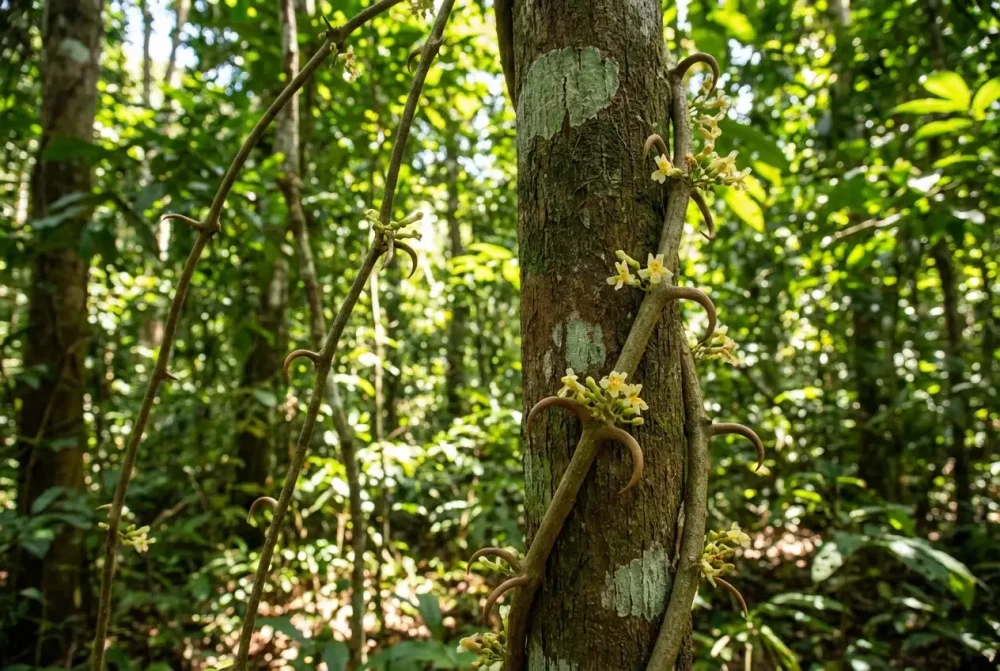
Cat's Claw and the Asháninka tradition
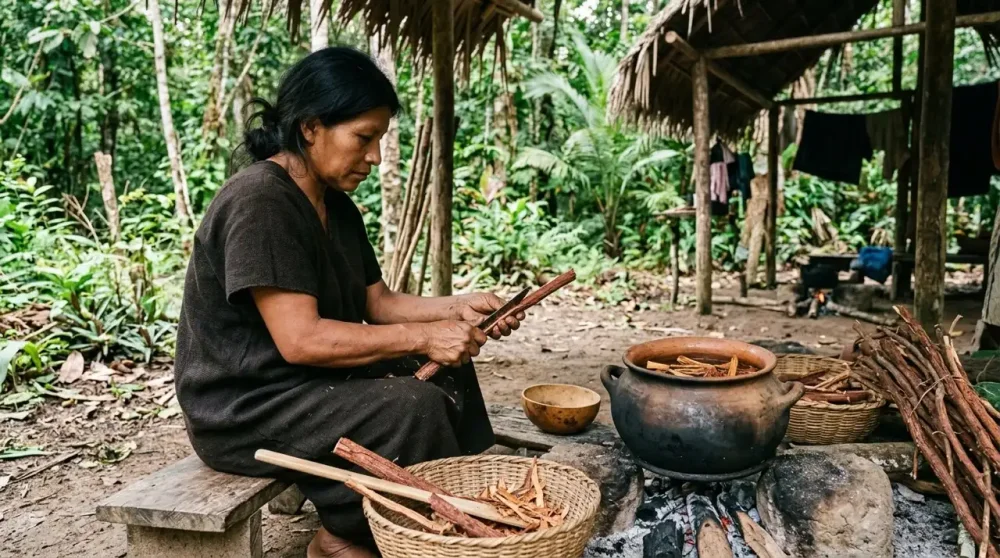
The vine is most closely tied to the Peruvian Amazon and to the Asháninka people. Scholarly reviews describe Uncaria tomentosa as a plant with a very long history of traditional use, with some sources citing a tradition among the Asháninka stretching back around 2000 years.
A note on that figure: it isn't an archaeologically fixed date but a number drawn from ethnobotanical literature. It's more sensible to read it as a marker of a very long tradition than as a precise start date.
Traditionally, the bark and root, and in some areas other parts of the plant, were prepared mainly as water decoctions. In Amazonian folk medicine, Vilcacora is traditionally associated with digestive complaints, joint problems, wound care and women's health. That's a description of traditional use, not a claim that the plant treats these conditions. The gap between traditional experience and modern clinical evidence is the important thing to keep in view here.
Which part of the plant is used
The best-known raw material is the bark of Uncaria tomentosa. The European Medicines Agency lists this herbal material as Uncariae tomentosae cortex, meaning the bark of Uncaria tomentosa. Traditional sources also describe the use of root bark, root and sometimes leaves.
This is a practical detail worth checking when you buy: the chemical make-up of different parts of the plant isn't identical, so it's worth knowing not only the botanical species but which part of the plant is in the pack. Bark also isn't processed like a delicate tea leaf. It's tougher, which is why its traditional preparation uses a decoction and longer contact with hot water rather than a quick steep.
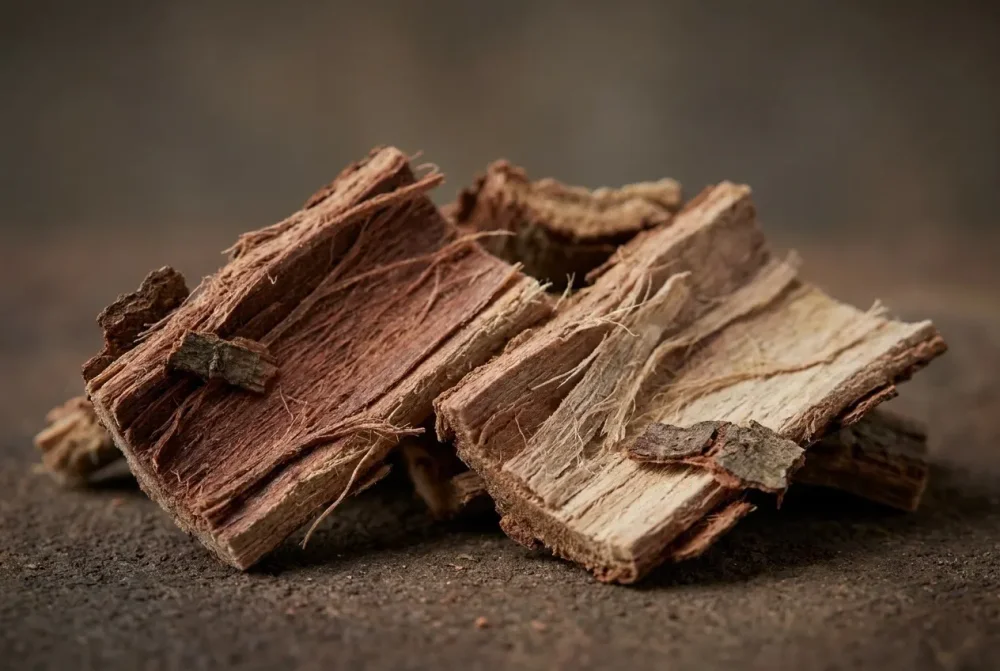
What Cat's Claw contains
From a phytochemistry point of view, Uncaria tomentosa is a complex plant, and it's the combination of several compound groups that keeps the scientific interest alive.
Oxindole alkaloids
The most characteristic group is the pentacyclic and tetracyclic oxindole alkaloids. In some pharmacopoeias they serve as a "fingerprint" for the species, the marker by which genuine Uncaria tomentosa is identified. They include mitraphylline, isomitraphylline, pteropodine, isopteropodine, speciophylline, uncarine F, rhynchophylline, hirsutine and hirsuteine, among others. Their proportions vary from plant to plant. In traditional phytochemistry they're associated with immune-response and inflammatory mechanisms.
Triterpenes and triterpene acids
The bark contains derivatives of ursolic, oleanolic and quinovic acids, along with quinovic acid glycosides.
Sterols
Beta-sitosterol, stigmasterol and campesterol.
Polyphenols and proanthocyanidins
Epicatechin, proanthocyanidins and other polyphenolic compounds studied for antioxidant activity in experimental models.
This list isn't a dosage guide or a list of guaranteed effects. It's a description of what analysis finds in the plant. Chemical or biological activity seen in the laboratory is not the same as a proven clinical effect in people.
What the research does and doesn't show
Uncaria tomentosa is one of the more heavily researched Amazonian plants. Studies have looked at its alkaloids, polyphenols and extracts in relation to inflammatory, oxidative and immune mechanisms. That includes laboratory work in which a hydroalcoholic bark extract showed in vitro activity against SARS-CoV-2 in cell cultures, and studies of proanthocyanidins on protein aggregates linked to neurodegeneration.
Most of those results, though, come from in vitro studies or animal work. A laboratory finding can't automatically be turned into a claim that Cat's Claw behaves the same way in the human body.
Human clinical trials are limited. Some do exist: a small phase II study in patients with advanced solid tumours recorded improvements in quality of life and reduced fatigue, and a few controlled studies have described reduced pain in inflammatory conditions. Even so, the US National Center for Complementary and Integrative Health concludes that convincing clinical evidence for using Cat's Claw to treat any specific health condition is still lacking.
None of that means the plant is uninteresting. It means there's a real gap between its remarkable phytochemistry and a proven therapeutic effect, and that gap is worth respecting rather than papering over.
Uncaria tomentosa and Uncaria guianensis are not the same
The names Uña de Gato and Cat's Claw are shared mainly by two species: Uncaria tomentosa and Uncaria guianensis. Both are related Amazonian vines and both go by Cat's Claw, but they aren't the same plant and their alkaloid profiles differ. Most commercial preparations labelled Cat's Claw contain Uncaria tomentosa.
For the buyer, the precise botanical name is far more useful than the folk name. If you're looking for traditional Vilcacora, check for Uncaria tomentosa (Willd. ex Schult.) DC. on the label.
How Cat's Claw is traditionally prepared
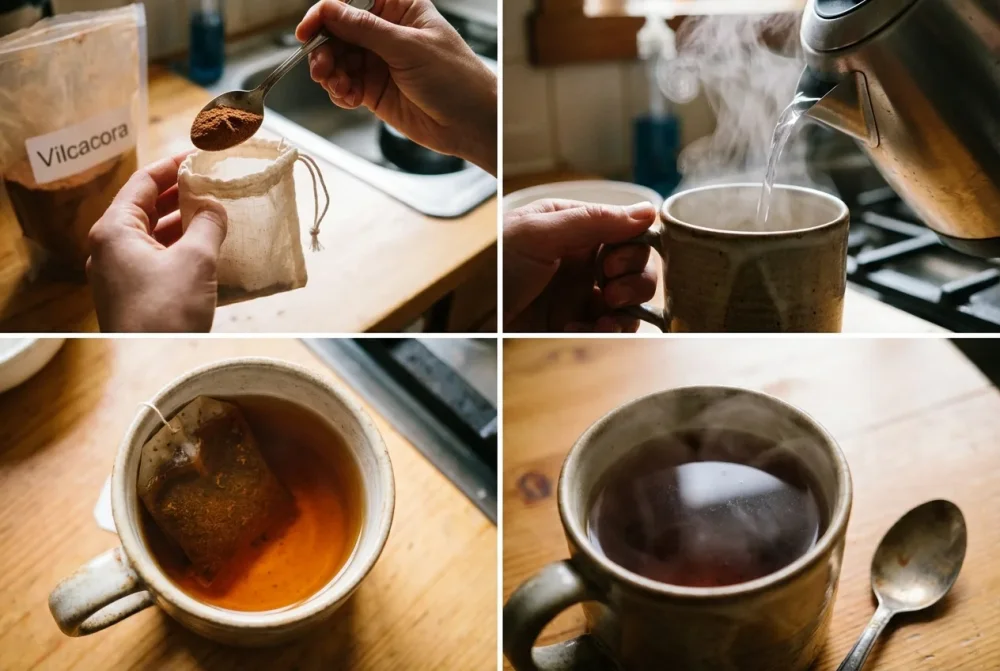
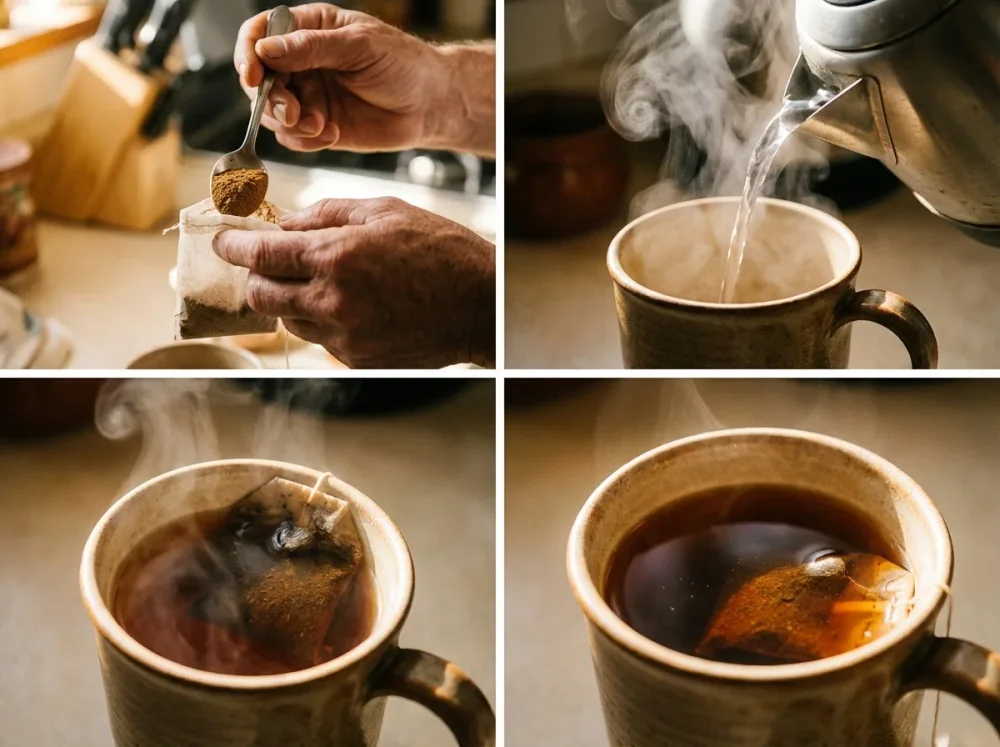
The most typical way of processing the bark is a decoction. Unlike delicate leaves, the tougher bark needs longer to release its compounds into the water. Traditionally a piece of bark is simmered for roughly 20 to 30 minutes over low heat, then left to stand briefly and strained. The taste is earthy and mildly bitter; most people who get used to it describe it as distinctive rather than off-putting.
The exact amount and time should follow the guidance on the specific product, since there's a difference between coarsely cut bark, a finer raw material and a standardised extract. Vilcacora also isn't a plant for an instant effect; traditionally it was used in courses with breaks rather than as a one-off.
Is Cat's Claw an "immune herb"
That label is common, but it oversimplifies what's actually known. Some components of Uncaria tomentosa are studied in connection with immune-response mechanisms, and the vine is often marketed as "immune support". Human clinical evidence, however, is limited. It's more accurate to speak of traditional use and a subject of research than of a guaranteed effect on the immune system.
And precisely because the plant may influence immune mechanisms, caution is warranted in certain situations.
When to take care with Cat's Claw
Natural origin doesn't mean a plant suits everyone. Cat's Claw has real cautions:
- Pregnancy: not recommended.
- Breastfeeding: there isn't enough reliable data on safety.
- Autoimmune conditions: because it's associated with affecting the immune system, caution and a conversation with your doctor are warranted.
- Before and after organ transplant, and with immunosuppressant medication: for the same reason, it isn't recommended over the longer term.
- Blood-thinning medication, antiplatelet treatment and blood-pressure medication: possible interactions.
- Planned surgery, and taking several medicines or herbal preparations at once.
If you have a health condition or take medication regularly, speak to a doctor or pharmacist before using Cat's Claw. This is a plant with a real pharmacological profile, not a harmless cuppa, which is exactly why its cautions are worth taking seriously.
Can you grow Cat's Claw at home
Short answer: in the UK, only with difficulty and only as an indoor or greenhouse plant that will almost certainly never yield usable bark.
Cat's Claw is a tropical vine used to year-round warmth and high humidity. It needs a temperature of at least 18 to 22°C all year, high air humidity, partial shade (in the wild it grows beneath the tree canopy) and free-draining, humus-rich soil. It grows slowly and flowers only after several years.
In our climate it's more of a collector's curiosity than a source of raw material. Anyone wanting to use Vilcacora reaches for dried bark from a trusted source instead.
How to choose good-quality Cat's Claw
When buying, a few concrete details are worth more than a pile of marketing claims.
Botanical species
Look for Uncaria tomentosa on the label, not the related Uncaria guianensis with its different profile. The names Cat's Claw or Uña de Gato alone may not be precise enough, since they're used for more than one species.
Plant part used
A quality product comes from the inner bark of the stem or root, since the bark carries the alkaloids. The product should state clearly which part of the plant it contains.
Origin
A specific country or region is a good sign. Peru and the Brazilian Amazon are the plant's natural home and are among the areas most associated with the traditional use of Uncaria tomentosa. A verified Peruvian source is a good sign.
Form
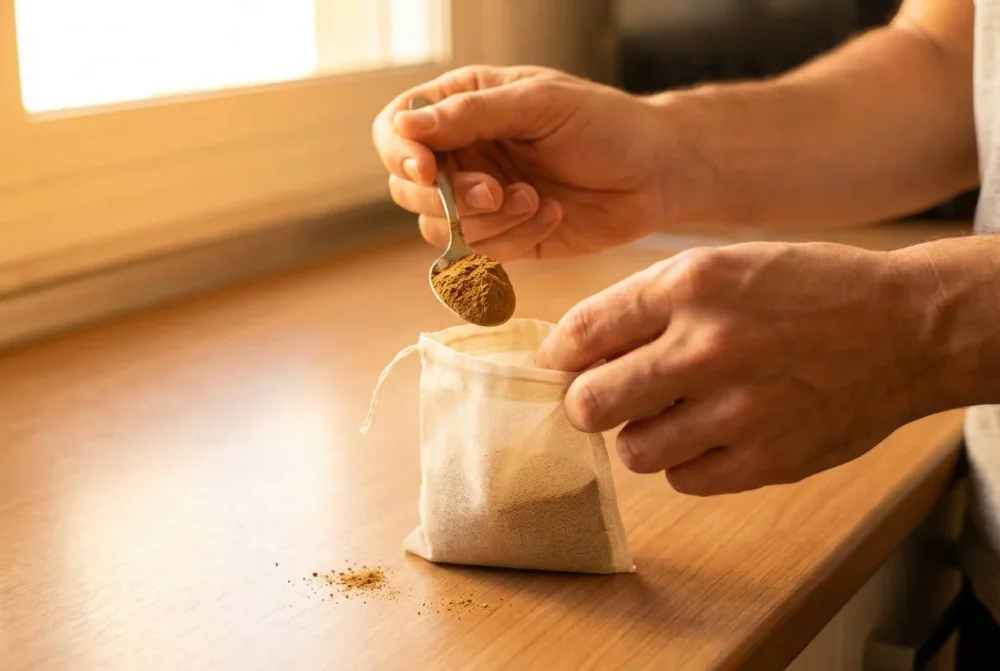
For a decoction, whole or cut bark is used. Cut bark is easier to measure and simmer, while larger pieces make it easier to judge the character of the material.
The more precisely a seller states the botanical species, plant part and origin, the easier it is to judge what's actually in the pack, and the less likely it is to be repackaged material of unknown provenance.
Vilcacora between tradition and modern science
What makes Cat's Claw interesting is the meeting of two worlds. On one side, a long Amazonian tradition, particularly among the Asháninka, where the bark of Uncaria tomentosa was taken as a decoction. On the other, a plant with an unusually rich chemical profile that has drawn pharmacologists' attention for decades.
But there's no shortcut between those two views. Traditional use isn't a clinical trial, and an interesting laboratory result isn't yet proof of a therapeutic effect in people. Cat's Claw deserves attention without grand promises. It's a remarkable Amazonian vine whose place in ethnobotany, distinctive make-up and ongoing research give plenty of reasons to know it as it really is.
Haux e muita alegria!
Frequently asked questions about Cat's Claw
What is Vilcacora?
Vilcacora is a name for the Amazonian vine Uncaria tomentosa from the rainforest of Peru and neighbouring regions. In the UK it's better known as Cat's Claw, and in Spanish as Uña de Gato. The main raw material is the inner bark of the root and stem.
Why is it called Cat's Claw?
Its stems carry curved, hook-like thorns that resemble a cat's claws, which it uses to grip surrounding vegetation.
Is Vilcacora the same as Cat's Claw?
Yes, they're two names for the same plant, Uncaria tomentosa. Watch the botanical name, though, since Cat's Claw and Uña de Gato are also used for the related Uncaria guianensis.
Which part of the plant is used?
Most often the bark. Traditional sources also describe the use of root bark, root and sometimes leaves.
What does Cat's Claw contain?
Several groups of natural compounds: oxindole alkaloids, triterpenes and triterpene acids, quinovic acid glycosides, sterols, and polyphenols including proanthocyanidins.
What are the effects of Cat's Claw?
It has a long history of traditional use, and several of its compounds show interesting biological activity in laboratory studies. Quality human clinical trials remain limited, so it isn't appropriate to credit it with a proven ability to treat specific conditions.
How is Cat's Claw traditionally prepared?
The bark is traditionally prepared as a decoction, simmered for roughly 20 to 30 minutes over low heat. The exact amount and time depend on the form and processing of the material.
Can everyone take Cat's Claw?
No. Caution is needed particularly during pregnancy and breastfeeding, with autoimmune conditions, before and after organ transplant, with certain medications and before surgery. If in doubt, consult a doctor or pharmacist.