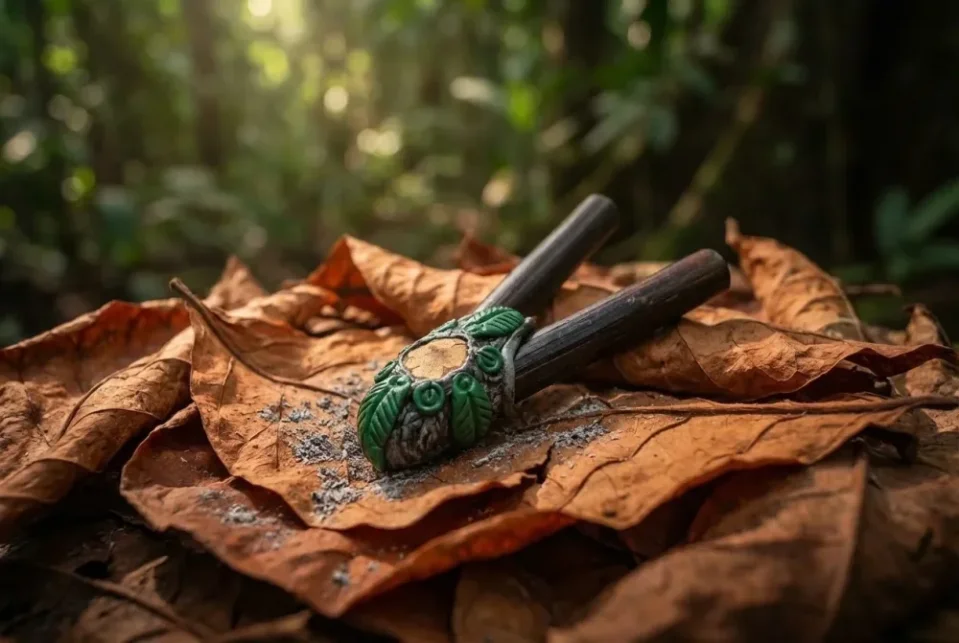
Kuripe: The Self-Applicator for Rapé — What It Is and How to Use It
Anyone who works with Rapé eventually faces the same practical question: how do you actually apply it when there's no one to serve you? The answer, developed over generations in the Amazon, is the Kuripe — a small V-shaped pipe that lets you blow the snuff into your own nostril. It looks simple. Getting one that fits your face and using it well takes a little more knowledge than most first-time buyers expect.
This guide covers what a Kuripe is, how it differs from a Tepi, what it's traditionally made from, and a step-by-step walkthrough of self-application.
What Is a Kuripe?
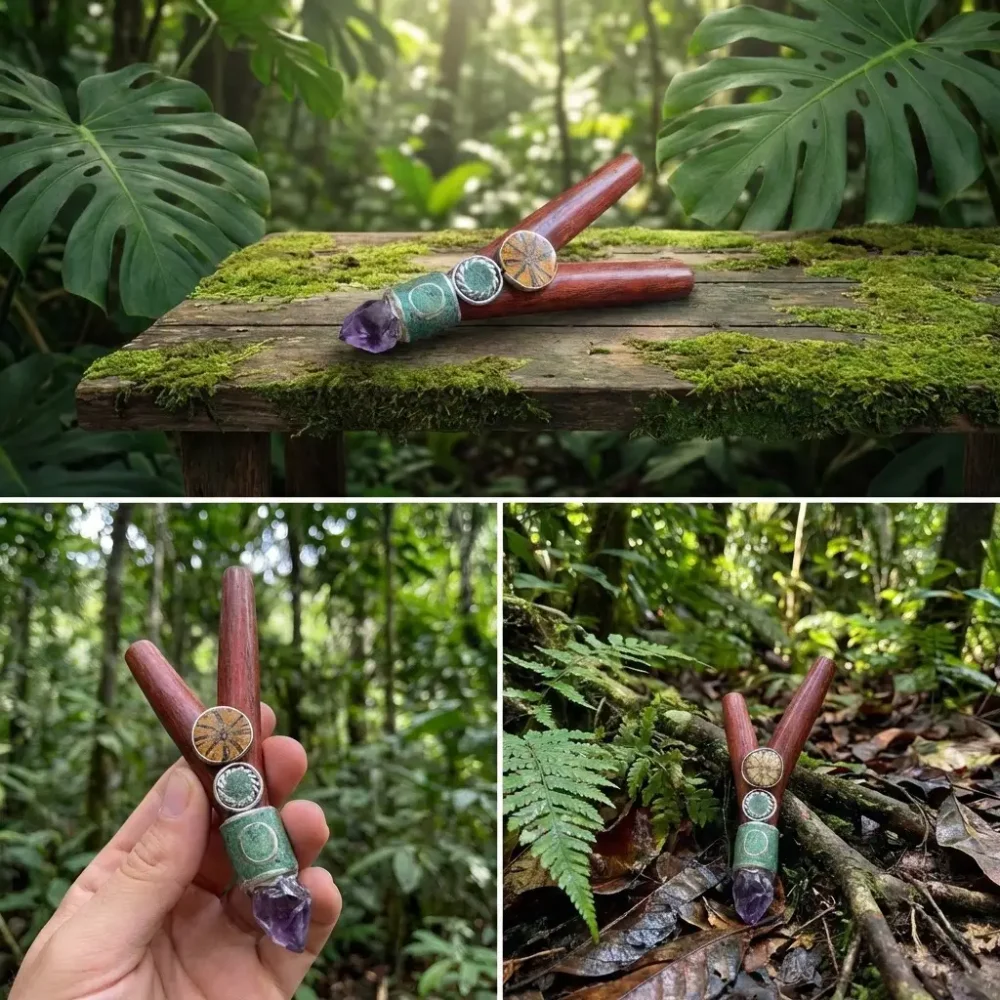
A Kuripe is a self-applicator for Rapé: two short tubes joined at an angle, forming a V. One end goes in your mouth, the other in your nostril. When you blow, your breath carries the snuff from the nasal end into your nose.
This matters more than it might seem, because within the traditions that Rapé comes from, the snuff is never sniffed or inhaled. It is always blown — either by another person or by yourself. The act of blowing, called the Soplada — the ceremonial blow, is considered part of the medicine itself. In these traditions, the breath of the person applying carries intention along with the powder. With a Kuripe, that person is you.
Kuripe vs Tepi: Which One Do You Need?
The Tepi is the Kuripe's longer sibling — a straight or gently curved pipe, typically 25–40 cm, used to serve Rapé to another person. One person blows, the other receives. In ceremonial settings this is the traditional format: receiving from a practitioner or shaman.
The Kuripe exists for solo practice. If you sit with Rapé on your own — before meditation, journaling, or simply as part of a personal routine — the Kuripe is the tool you need. Many people who work with Rapé regularly end up owning both: a Kuripe for daily personal use, a Tepi for sharing with a partner or in a circle.
Materials and Craftsmanship
Traditional Kuripes across the Amazon have been made from bamboo, hardwoods, bone, and occasionally stone, often decorated with seeds, feathers, or woven fibre. In indigenous understanding, the material is not neutral — the plant or animal the applicator comes from is part of its character, a link between the tool and the forest it came from.
The Kuripes we stock at LaHerba are made from three materials:
Bamboo is light, naturally hollow, and the most affordable entry point. A well-finished bamboo Kuripe is perfectly functional — the main thing to check is that the bore has been smoothed and sealed, which we inspect on every piece before listing.
Chonta is a dense Amazonian palm wood, dark and heavy in the hand. It takes a fine polish and holds up to years of use. If you want something that feels substantial and will survive being carried in a bag, Chonta is the durable choice.
Bloodwood (Satine) sits at the craftsmanship end — a deep red hardwood that darkens beautifully with age and handling. These are usually the pieces people choose when the Kuripe is meant to be a long-term companion rather than a starter tool.
Every Kuripe we list is checked for two things before it goes on the site: clean, unobstructed airflow through both tubes, and a properly sealed joint where the two arms meet. A leaky joint means weak, uneven delivery — it's the most common flaw in cheap applicators.
How to Choose a Kuripe
Five factors matter more than appearance:
- The V-angle. The two arms need to comfortably reach your mouth and nostril at the same time. Too narrow or too wide an angle and you'll be straining your neck with every application.
- Bore smoothness. A rough interior catches powder and disrupts airflow. The blow should feel effortless.
- Hole size. Wider bores deliver more snuff faster; narrower ones give a gentler, more controlled application. Beginners generally do better with a moderate bore.
- Cleaning access. You'll be cleaning it regularly. Straight, accessible tubes make that a thirty-second job instead of a chore.
- Robustness. If it travels with you, it needs to survive the trip.
How to Use a Kuripe: Step by Step
Before you begin, a note on tradition: Rapé is applied to both nostrils, one after the other. In the traditions it comes from, applying to only one side is understood to leave the person unbalanced. Some lineages also assign meaning to the order — the left nostril associated with releasing and death, the right with renewal and rebirth — though practices vary between tribes.
1. Prepare the Rapé. Take a small amount of snuff from your container — traditionally measured in pea-sized portions rather than by weight. Place it in your palm or on a small dish.
2. Load the Kuripe. Scoop or tap the snuff into the nasal end of the pipe (the shorter arm on most designs). Tap the side gently so the powder settles into the tube rather than sitting at the opening.
3. Settle yourself. Sit comfortably, spine upright, head tilted back very slightly. Many practitioners take a moment here — a few slow breaths, a stated intention. In the tradition, this pause is not decoration; the state you bring to the Soplada is considered part of what you receive.
4. Position the pipe. Place the nasal end just inside one nostril and the mouth end between your lips. Take a full breath in through your mouth before the pipe is in place, or around it — not through the pipe itself.
5. Blow. Exhale into the mouthpiece in one steady, committed breath. Not a violent burst, not a hesitant puff — a firm, even blow that carries the full portion into the nostril. A half-hearted blow leaves powder in the tube and delivers unevenly, which is more uncomfortable, not less.
6. Repeat on the other side. Reload and apply to the second nostril. Try to keep the two applications reasonably matched in amount and strength.
7. Sit with it. Close your eyes. Breathe through your mouth and let the Rapé sit — resist the urge to blow your nose immediately. Practitioners typically remain seated and quiet for several minutes. When the impulse comes naturally, blow your nose gently to clear any excess. Keep tissues within reach; you'll want them.
The first applications are intense for almost everyone — a sharp, immediate sensation that experienced users come to know well. This is expected. Traditionally, this intensity is part of the practice, associated in indigenous use with clearing Panema — a state the Amazonian tribes describe as heaviness, lethargy, or clouded focus. Historically, hunters used Rapé before setting out, and it remains present in Ayahuasca ceremonies across the region.
Caring for Your Kuripe
Tap out residual powder after each use. Once a week or so — more if you use it daily — run a pipe cleaner or thin brush through both tubes. Wooden Kuripes shouldn't be soaked in water; a dry clean or a lightly damp cloth on the exterior is enough. Stored dry and clean, a hardwood Kuripe will outlast the person who made it.
Frequently Asked Questions about Kuripe
Can I just sniff Rapé instead of using a Kuripe?
Within the traditions Rapé comes from, no — it is always blown, never sniffed. The Soplada is considered inseparable from the practice, and self-application without an applicator delivers the snuff poorly and unevenly.
Which end of the Kuripe goes in the nose?
The shorter arm typically goes to the nostril and the longer to the mouth, though designs vary. Functionally, the end you load with snuff is the nasal end.
How much Rapé should I load?
Traditional practice works with small, pea-sized portions. Those new to the practice typically begin with less and let experience guide them.
Do I apply to one nostril or both?
Both, always — this is consistent across the traditions. Applying to a single nostril is traditionally understood to leave the recipient unbalanced.
How is a Kuripe different from a Tepi?
A Kuripe is V-shaped and used for self-application; a Tepi is a longer straight pipe used to serve another person. Same purpose, different context.
What material should a beginner choose?
Bamboo is the accessible starting point. If you already know Rapé will be a lasting practice, Chonta or bloodwood justify the higher price through durability and feel.
Ready to choose yours? Browse our Kuripe collection — every piece airflow-tested and joint-checked before listing — or pair it with a blend from the Rapé collection.
Haux e muita alegria!