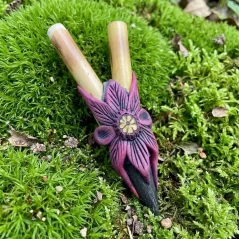
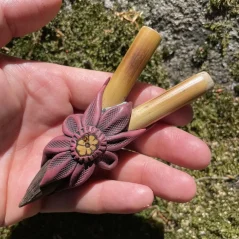
Kuripe: The Self-Applicator for Rapé
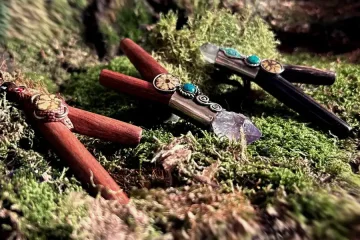
Anyone who works with Rapé eventually faces the same practical question: how do you actually apply it when there's no one to serve you? The answer, developed over generations in the Amazon, is the Kuripe — a small V-shaped pipe that lets you blow the snuff into your own nostril. It looks simple. Getting one that fits your face and using it well takes a little more knowledge than most first-time buyers expect.
This guide covers what a Kuripe is, how it differs from a Tepi, what it's traditionally made from, and a step-by-step walkthrough of self-application.
What Is a Kuripe?
A Kuripe is a self-applicator for Rapé: two short tubes joined at an angle, forming a V. One end goes in your mouth, the other in your nostril. When you blow, your breath carries the snuff from the nasal end into your nose.
This matters more than it might seem, because within the traditions that Rapé comes from, the snuff is never sniffed or inhaled. It is always blown — either by another person or by yourself. The act of blowing, called the Soplada — the ceremonial blow, is considered part of the medicine itself. In these traditions, the breath of the person applying carries intention along with the powder. With a Kuripe, that person is you.
Kuripe vs Tepi: Which One Do You Need?
The Tepi is the Kuripe's longer sibling — a straight or gently curved pipe, typically 25–40 cm, used to serve Rapé to another person. One person blows, the other receives. In ceremonial settings this is the traditional format: receiving from a practitioner or shaman.
The Kuripe exists for solo practice. If you sit with Rapé on your own — before meditation, journaling, or simply as part of a personal routine — the Kuripe is the tool you need.
Many people who work with Rapé regularly end up owning both: a Kuripe for daily personal use, a Tepi for sharing with a partner or in a circle.
Materials and Craftsmanship
Traditional Kuripes across the Amazon have been made from bamboo, hardwoods, bone, and occasionally stone, often decorated with seeds, feathers, or woven fibre. In indigenous understanding, the material is not neutral — the plant or animal the applicator comes from is part of its character, a link between the tool and the forest it came from.
The Kuripes we stock at LaHerba are made from three materials:
Bamboo is light, naturally hollow, and the most affordable entry point. A well-finished bamboo Kuripe is perfectly functional — the main thing to check is that the bore has been smoothed and sealed, which we inspect on every piece before listing.
Chonta is a dense Amazonian palm wood, dark and heavy in the hand. It takes a fine polish and holds up to years of use. If you want something that feels substantial and will survive being carried in a bag, Chonta is the durable choice.
Bloodwood (Satine) sits at the craftsmanship end — a deep red hardwood that darkens beautifully with age and handling. These are usually the pieces people choose when the Kuripe is meant to be a long-term companion rather than a starter tool.
Every Kuripe we list is checked for two things before it goes on the site: clean, unobstructed airflow through both tubes, and a properly sealed joint where the two arms meet. A leaky joint means weak, uneven delivery — it's the most common flaw in cheap applicators.
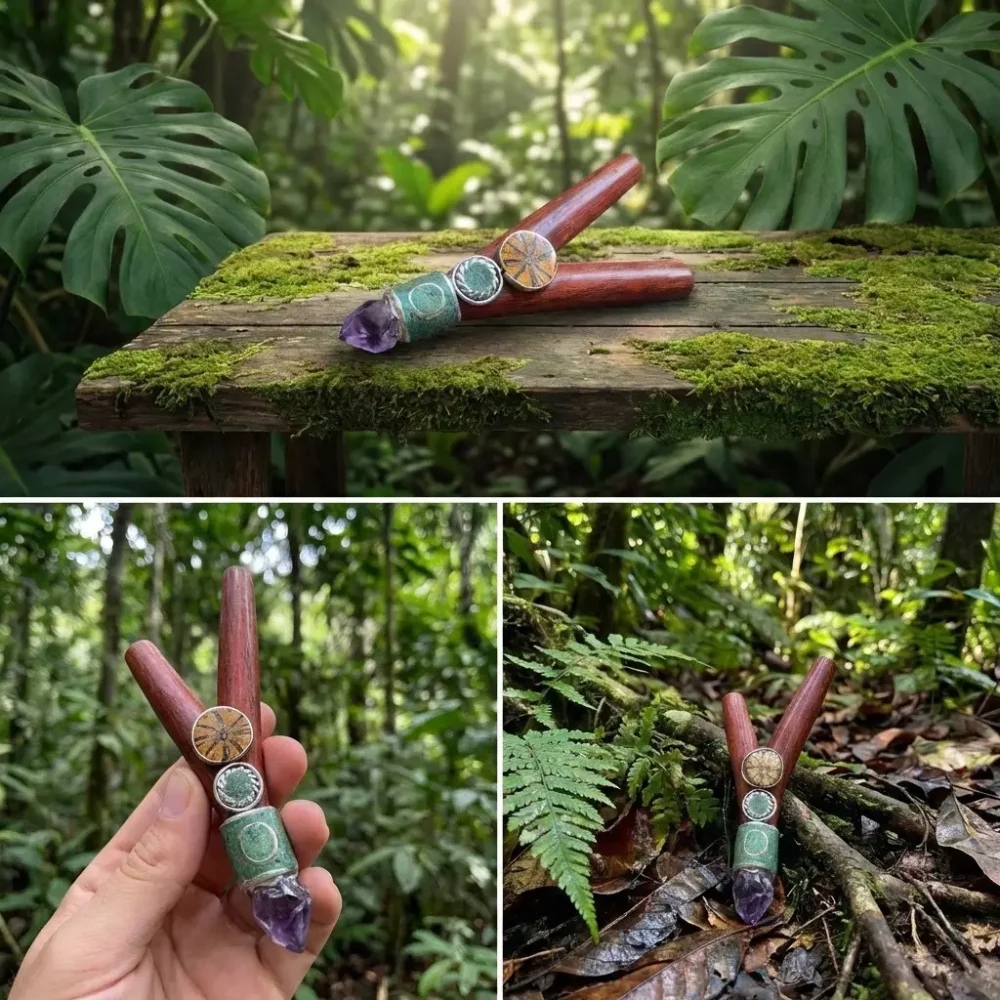
How to Choose a Kuripe
Five factors matter more than appearance:
Frequently Asked Questions about Kuripe
Can I just sniff Rapé instead of using a Kuripe?
Which end of the Kuripe goes in the nose?
How much Rapé should I load?
Do I apply to one nostril or both?
How is a Kuripe different from a Tepi?
What material should a beginner choose?
How to Use a Kuripe: Step by Step
Before you begin, a note on tradition: Rapé is applied to both nostrils, one after the other. In the traditions it comes from, applying to only one side is understood to leave the person unbalanced. Some lineages also assign meaning to the order — the left nostril associated with releasing and death, the right with renewal and rebirth — though practices vary between tribes.
The first applications are intense for almost everyone — a sharp, immediate sensation that experienced users come to know well. This is expected. Traditionally, this intensity is part of the practice, associated in indigenous use with clearing Panema — a state the Amazonian tribes describe as heaviness, lethargy, or clouded focus. Historically, hunters used Rapé before setting out, and it remains present in Ayahuasca ceremonies across the region.
Caring for Your Kuripe
Tap out residual powder after each use. Once a week or so — more if you use it daily — run a pipe cleaner or thin brush through both tubes. Wooden Kuripes shouldn't be soaked in water; a dry clean or a lightly damp cloth on the exterior is enough. Stored dry and clean, a hardwood Kuripe will outlast the person who made it.
Ready to choose yours? Browse our Kuripe collection — every piece airflow-tested and joint-checked before listing — or pair it with a blend from the Rapé collection.
Haux e muita alegria!
Recommended products8
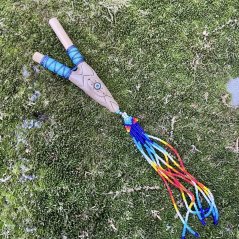
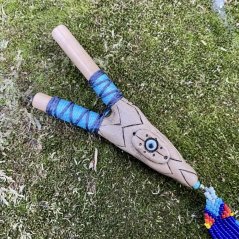
Kuripe Blue
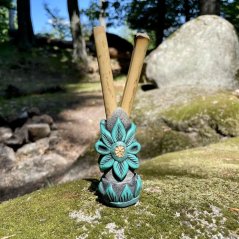
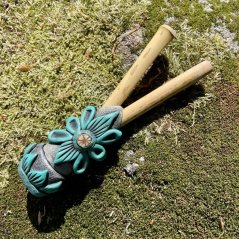
Kuripe Porta
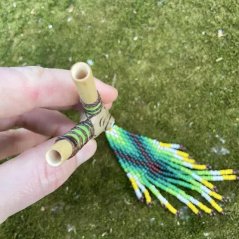
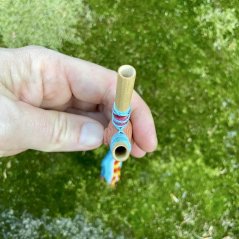
Kuripe Green
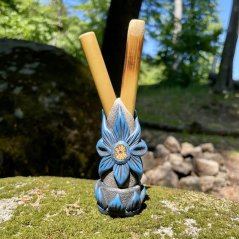
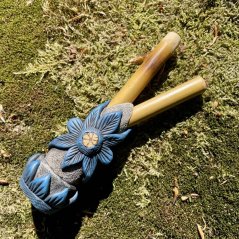
Kuripe Porta
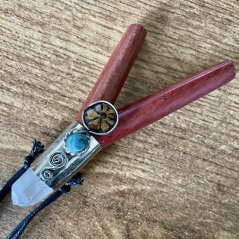
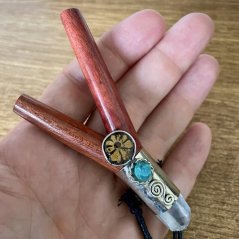
Kuripe Palo Sangre Crystal
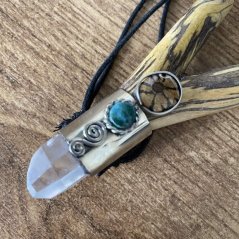
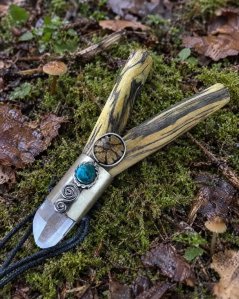
Kuripe Crystal Aya wood
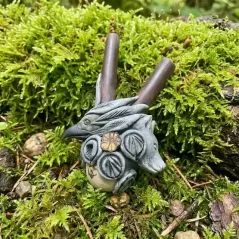
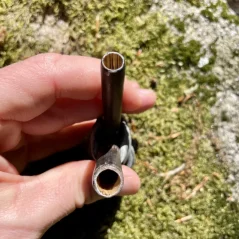
Kuripe Marajá Eagle & Wolf